Independent supplement ratingsUS and Canada · Updated weekly

A ratings desk for a category that has spent thirty years grading its own homework.
A ratings desk for a category that has spent thirty years grading its own homework.
One of the few pre-workout ingredients that reliably works — at the right dose, at the right time, without wrecking your sleep.
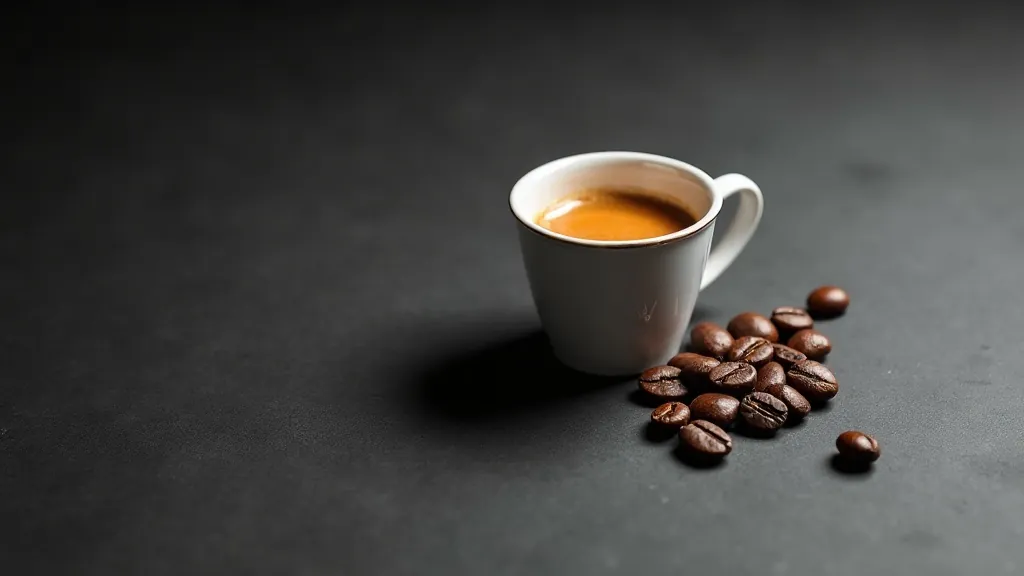
The short answer: 3–6 mg of caffeine per kg of body weight, taken about 30–60 minutes before training, reliably improves strength, power and endurance. More than that doesn't help and just adds jitters — and if you train in the evening, it can quietly ruin your sleep.
Caffeine is one of the best-evidenced performance supplements there is. The International Society of Sports Nutrition's 2021 position stand concludes that caffeine improves many aspects of exercise — muscular endurance, strength, sprinting, jumping and endurance performance — at doses of 3–6 mg/kg of body mass. (Guest et al., 2021) Unlike most of what's sold in a pre-workout tub, this one has decades of human data behind it.
| Body weight | Effective dose (3–6 mg/kg) |
|---|---|
| 60 kg / 132 lb | ~180–360 mg |
| 75 kg / 165 lb | ~225–450 mg |
| 90 kg / 198 lb | ~270–540 mg |
For reference, a strong cup of coffee is roughly 100 mg. Start at the low end (3 mg/kg) — most people get the full benefit there, without the racing heart. Our caffeine calculator does the maths and shows a sensible daily ceiling.
Caffeine peaks in your blood roughly 30–60 minutes after you take it, so that's the window to aim for before a session. There's no need to take it the instant you walk into the gym — plan it like a warm-up.
Caffeine's half-life is roughly five hours in a typical adult — so a 200 mg dose at 4 pm still has around 100 mg circulating at 9 pm. That is the whole problem with an evening session.
It is measurable, not theoretical. In a controlled study, 400 mg of caffeine taken six hours before bed still reduced total sleep time by more than an hour — and the people it happened to often did not notice, which is the unsettling part. (Drake et al., 2013)
Losing an hour of sleep to gain a few percent on a set is a bad trade. Sleep is where training adaptations are consolidated. If you train after about 4 pm, this is the single strongest argument for training without caffeine — or for a much smaller dose.
Regular use blunts the effect. Not to zero, but the jolt fades and the dose creeps up to chase it — which is how people end up at 400 mg before an ordinary session and 600 mg before a hard one.
Worse, habitual users get withdrawal: headache, fogginess and low mood if they skip. At that point a good chunk of the "boost" is just restoring you to normal rather than lifting you above it.
Two workable approaches. Keep a low steady daily habit and accept a modest effect. Or keep intake low most days and save a real dose for sessions that matter. What does not work is escalating indefinitely.
Before adding a supplement, add up what you already drink. Approximate figures:
Two coffees plus a scoop of pre-workout can clear 500 mg before you have touched a barbell. That is above the daily ceiling for healthy adults, from three ordinary decisions.
The caffeine figure is the only ingredient in most pre-workouts with a solid evidence base, which makes it the one worth checking. Watch for three things:
Honestly, plain caffeine tablets or coffee give you the same effect at a fraction of the cost. Most of a pre-workout's price is flavouring and ingredients with thinner evidence. Work out your own dose here →
Pregnancy and breastfeeding: health authorities in the US, UK and EU converge on about 200 mg a day, half the general adult ceiling.
Heart conditions, high blood pressure, arrhythmia: a conversation for your doctor rather than a calculator.
Anxiety disorders: caffeine reliably worsens anxiety symptoms in people prone to them. The physical sensations it produces are close to the ones a panic response produces.
Medication interactions: several common drugs — some antibiotics, some antidepressants — slow caffeine clearance considerably, which effectively raises your dose without changing what you drink.
Both work. Coffee's caffeine content varies wildly cup to cup, so a tablet or a measured powder is better if you want a specific dose. For most people, coffee is fine and cheaper.
Not meaningfully at these doses. The mild diuretic effect is offset by the fluid you drink it in. The old advice to drink extra water to "compensate" for coffee is not supported.
A week or two of low intake does restore sensitivity, at the cost of a few unpleasant days. Worth it before a competition; not worth doing constantly.
It raises energy expenditure slightly and blunts appetite a little. Neither effect is large enough to matter against what you eat, and every "thermogenic" fat burner is mostly selling you caffeine at a markup.
Caffeine is the one pre-workout ingredient worth the money — at 3–6 mg/kg, 30–60 minutes out, earlier in the day. The rest of a typical pre-workout formula is mostly flavour and marketing around this one proven stimulant.
Written and fact-checked by the NFS editorial team · Last updated 06 Aug 2026. Educational only — not medical advice. Caffeine isn't for everyone — pregnancy, heart conditions and some medications lower safe limits.