Independent supplement ratingsUS and Canada · Updated weekly

A ratings desk for a category that has spent thirty years grading its own homework.
A ratings desk for a category that has spent thirty years grading its own homework.
Dated posts: new products, ranking changes, trend breakdowns and our own small investigations.
Pooled across 23 trials it does raise testosterone in men, by about 57 ng/dL. The trial that measured how men felt found no difference at all.
Three of the biggest names in electrolytes, priced on the ingredient you buy them for. The most expensive stick turns out to carry the cheapest sodium.
One 2009 study in untrained men launched a shelf full of products. Three trials in the men who actually buy them found nothing, and one found the opposite.

Pooled across the trials, magnesium gets you to sleep about seventeen minutes faster. It does not reliably keep you there, and the evidence behind both is weaker than the shelf suggests.
Four hold up, two hold up conditionally, five are thin and one has been tested and failed. The pattern behind the grades is the useful part.

Take arginine by mouth and your gut destroys most of it before it reaches your blood. Citrulline goes round the problem — and raises arginine better than arginine does.
One is made from root only, the other from root and leaf. Their trials point at different outcomes, and their milligrams do not compare.
Two numbers decide it, and one of them is close to unpredictable. The best model built on 1,944 sweat tests explains under a quarter of the difference between people.
The daily target is 310 to 420 mg depending on who you are, most people miss it, and the number on the front of the tub is not the number that counts.
Researchers put 50 of these products through the literature. Three in five ingredients had no published data at all. Two survive the check, with conditions.
One calculation across all 27 products in our rankings. The spread runs to nineteen-fold, and for six of them the sum cannot be done at all.
The most-studied supplement there is, cut down to what the research supports: 3–5 g a day, timing optional, and skip the fancy forms.
The research points to a number most people undershoot — and a point of diminishing returns most people never reach.

One of the few pre-workout ingredients that reliably works — at the right dose, at the right time, without wrecking your sleep.

They raise muscle protein synthesis on paper — and do almost nothing extra once your protein is handled. The honest verdict.

One of the few supplements with real randomised-trial support — for stress and cortisol, at a specific extract and dose. Here's the evidence, and its limits.

Every change we make to the magnesium ranking, dated and explained — and the four things that cause one.
We ran the five electrolyte products in our ranking through one calculation: what a gram of sodium actually costs you. The spread is nearly seven-fold.

Price per serving, anchored list prices and the subscription trap: how to check whether a supplement sale is really a sale before you hand over a card.
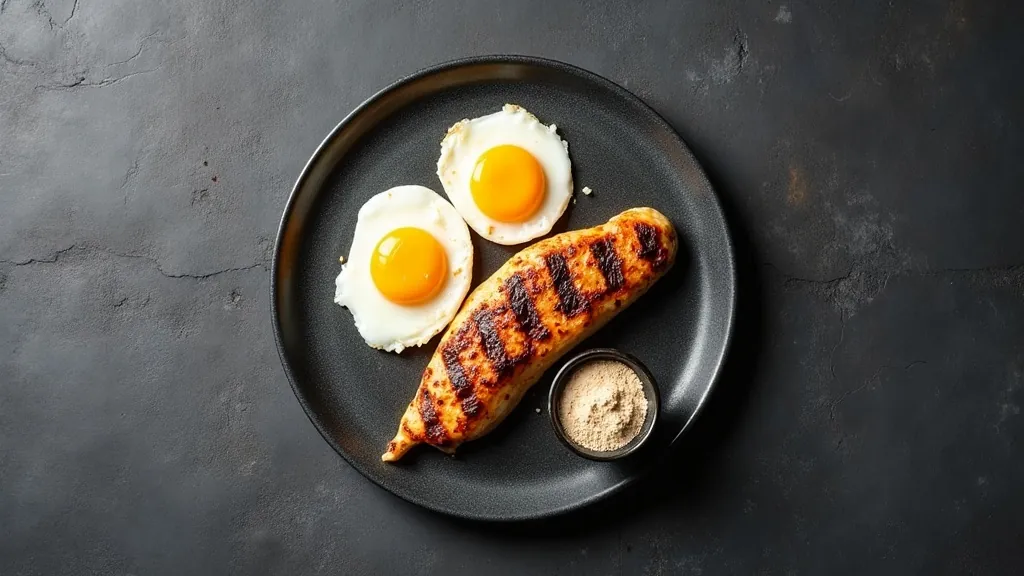
The research-backed number is lower than the industry wants you to think — and past it, more protein builds no more muscle.
"Do these supplements work" is the most-asked question in this category and the worst-served. The honest answer is rarely yes or no. It is that an ingredient works at a dose, in a population, for an outcome — and that the product in front of you may contain a tenth of that dose, in a form that never reaches your bloodstream.
Every post in the Does It Work? rubric follows the same shape: what the research measured, at what dose, in whom, and what that means for a product you can actually buy.
Claims here are cited to primary sources — published trials, meta-analyses, position stands from the ISSN, government intake figures. Not to another blog, and not to the brand's own research page. Where the evidence is weak we say it is weak, including when that undercuts a product sitting high in our own rankings.
Analysis is our own arithmetic run across the market — the cost of a gram of sodium, the spread of prices per active ingredient. Ranking update logs what moved in a ranking and why. Buying covers the practical traps, like telling a real discount from a manufactured one.
Investigations into specific selling tactics have their own home in Scam Watch, and the evergreen reference material is in guides.