Independent supplement ratingsUS and Canada · Updated weekly

A ratings desk for a category that has spent thirty years grading its own homework.
A ratings desk for a category that has spent thirty years grading its own homework.
One of the few supplements with real randomised-trial support — for stress and cortisol, at a specific extract and dose. Here's the evidence, and its limits.
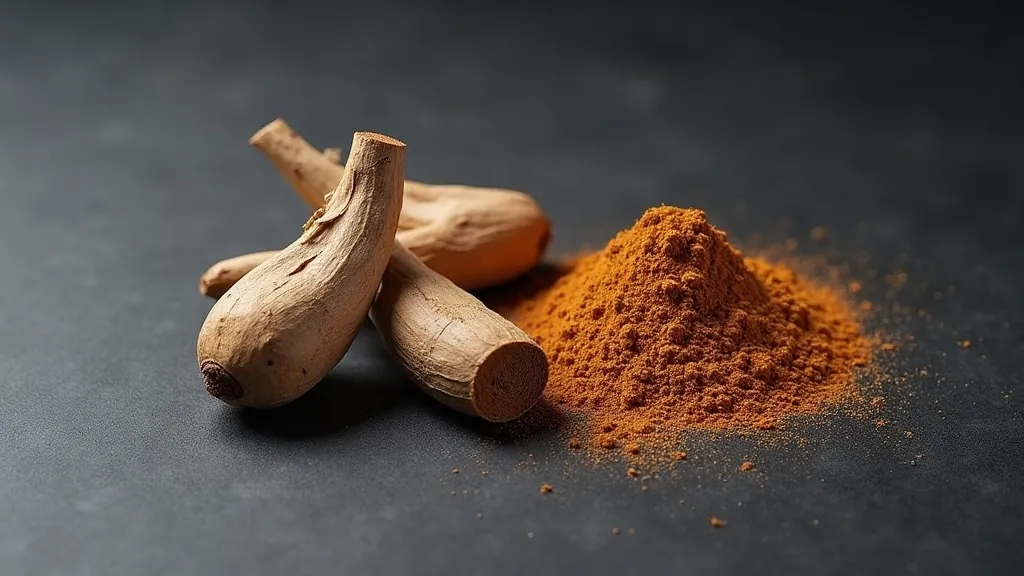
The short answer: ashwagandha is one of the few supplements on this whole site with real randomised-controlled-trial support — specifically for reducing stress and cortisol, from a standardized extract at roughly 300–600 mg a day. The effect is modest but genuine. Most of the caveats are about which ashwagandha you take, not whether it works.
This is where ashwagandha earns its reputation. In a 2012 randomised, double-blind, placebo-controlled trial, 64 chronically-stressed adults took 300 mg of KSM-66 extract twice a day (600 mg total) for 60 days. The ashwagandha group saw significantly larger drops in perceived-stress scores and in serum cortisol — the main stress hormone — than placebo, with only mild side effects. (Chandrasekhar et al., 2012) A later 2019 trial using a standardized root extract found the same pattern: lower stress scores and lower morning cortisol versus placebo. (Salve et al., 2019)
That's a genuinely strong footing by supplement standards: multiple randomised trials, a plausible mechanism, and a consistent result. It won't erase real anxiety or replace treatment — but for everyday stress, the data is real.
The trials run on named, standardized extracts — mostly KSM-66 and Sensoril — at about 300–600 mg a day. This is the single most important thing to get right:
It's exactly why our ashwagandha ranking scores named extracts above root powder regardless of the headline milligrams.
Here the evidence is thinner. A few small studies in men have reported modest increases in testosterone and strength alongside the stress reduction — but the trials are small, and stress reduction and better sleep may be doing much of the work indirectly. Treat "ashwagandha boosts testosterone" as promising but not settled, and don't buy it expecting a hormonal transformation.
Short-term use of standardized extract is generally well tolerated in the trials. But it isn't for everyone: ashwagandha can interact with thyroid medication, may not suit people with autoimmune conditions, and isn't recommended in pregnancy. There have also been rare reports of liver issues. As with anything that has a real physiological effect, run it past a clinician if you take medication or have a health condition — this is a supplement, not a treatment.
Worth being precise, because the word is doing a lot of work in the marketing. The trials measure self-reported stress and anxiety scores, and in some cases salivary or serum cortisol. They do not measure happiness, resilience or a fixed life.
A meaningful drop on a stress questionnaire over eight weeks is a real finding. It is also a modest one, in small studies, mostly in people who were stressed at the start. If you are not particularly stressed, there is much less reason to expect anything.
Ashwagandha is increasingly sold to men on a hormonal claim, so it deserves a straight answer.
There is some signal. In a randomised crossover study in overweight men aged 40–70 with mild fatigue, an ashwagandha extract produced about 14.7% higher testosterone and 18% higher DHEA-S than placebo over eight weeks. (Lopresti et al., 2019)
Read the population carefully: overweight, older, tired men. That is not the same as a healthy 25-year-old with normal hormones, and the studies are small. A percentage change in a salivary hormone reading is also not the same as a change in how you feel or perform.
Our position: this is a supplement with decent evidence for stress and preliminary evidence for hormones in specific groups. Anyone selling it primarily as a testosterone booster is running well ahead of the data. How we score that whole category →
The trials run eight to twelve weeks, and that is roughly the timeline to judge it on. Nothing here works on day three, and a product promising an overnight change is describing a different mechanism than the one the research supports.
Take it daily, at the same time, for at least eight weeks before deciding. With food is fine, and some people find evening dosing sits better.
Study quality is mixed and the trials are small. Many run 50–120 people over eight weeks, several are funded by extract manufacturers, and independent replication is thinner than the confident marketing implies.
Long-term safety is not established. Eight to twelve weeks is well documented. Years of continuous use is not — which is a reason for periodic breaks rather than indefinite daily use.
Liver injury reports exist. Rare, but there are published case reports of liver injury associated with ashwagandha products, some involving contamination rather than the herb itself. Rare is not never. Stop and see a doctor if you notice yellowing skin, dark urine or unexplained fatigue.
Both are standardized and both have trial support. KSM-66 is root-only and more common in the energy and testosterone research; Sensoril includes leaf, is more concentrated in withanolides, and shows up more in stress and sleep work. Either beats an unnamed extract.
Studies have used both. If it makes you drowsy, take it in the evening; if it doesn't, timing is not important. Consistency matters more.
Yes, and it is a common pairing for sleep and stress. They work through different mechanisms and there is no known interaction. Our magnesium ranking →
There is no good evidence of tolerance, but there is also no long-term data. A break every few months is a sensible precaution rather than a proven need.
Ashwagandha root contains a family of compounds called withanolides, and they are what the research is about. Everything that separates a serious product from a decorative one comes back to how many withanolides you are getting and whether the label will tell you.
A standardized extract states its withanolide content as a percentage. KSM-66 is standardized to at least 5% withanolides; Sensoril runs considerably higher at around 10%, which is why its studied doses are smaller. Raw root powder typically sits under 1%, and often the label does not say at all.
That is why a 1,000 mg root powder capsule can deliver less active compound than a 300 mg extract capsule. The bigger milligram figure is the weaker product, and it is printed larger precisely because it is bigger.
Two things to look for, in this order: a named extract, and a stated withanolide percentage. A label with neither is asking you to take its word for it.
| Extract | Plant part | Standardization | Studied at | Researched mostly for |
|---|---|---|---|---|
| KSM-66 | Root only | ≥5% withanolides | 300–600 mg/day | Stress, strength, testosterone, endurance |
| Sensoril | Root and leaf | ≥10% withanolides | 125–250 mg/day | Stress, sleep, fatigue |
| Shoden | Root and leaf | 35% withanolide glycosides | 120 mg/day | Sleep, hormonal markers |
| Unnamed extract | Usually unstated | Usually unstated | Unknown | Nothing specific |
The doses in that table are not interchangeable. 120 mg of Shoden is not a low dose and 600 mg of KSM-66 is not a high one — they are concentrated differently. Comparing milligrams across extracts without comparing standardization is the error the whole category runs on.
Whether root-only or root-and-leaf is better remains an argument between manufacturers rather than a settled scientific question. Traditional use favours root; the leaf-inclusive extracts are more concentrated. Both have trial support.
This is the strongest claim ashwagandha has, and it is worth seeing what the numbers actually look like rather than taking "clinically proven" at face value.
In a 60-day trial in chronically stressed adults, 300 mg twice daily of a high-concentration root extract produced substantially larger reductions in stress-scale scores than placebo, alongside a meaningful drop in serum cortisol. (Chandrasekhar et al., 2012)
A later trial in healthy but stressed adults, using 250 mg and 600 mg daily for eight weeks, found reductions in perceived stress and cortisol at both doses, with the larger dose performing better. (Salve et al., 2019)
Consistent direction, consistent timeline, dose-responsive. For a botanical supplement, that is a good evidence profile — and it is far better than anything else in the "stress support" aisle can show.
What it is not: a treatment for an anxiety disorder. The participants were stressed people, not diagnosed patients, and the outcome was a questionnaire score. If anxiety is affecting your life, that belongs with a clinician.
Sleep sits just behind stress in the evidence, and the two are hard to separate — a less stressed person sleeps better regardless of mechanism.
A ten-week randomised, double-blind trial in people with insomnia used 300 mg of root extract twice daily and measured sleep with actigraphy rather than self-report alone. Sleep onset latency, total sleep time and sleep efficiency all improved against placebo, and anxiety scores fell alongside them. (Langade et al., 2019)
Sixty participants is a small trial and the effect sizes are modest. But measuring sleep with a device rather than a questionnaire raises the quality of the evidence above most of what this category offers.
If sleep is your reason for buying, take it in the evening and give it the full eight to ten weeks. It does not work like a sedative and nothing happens on night one.
An eight-week trial in 57 young men new to resistance training compared 300 mg of KSM-66 twice daily against placebo alongside a structured programme. The supplemented group showed greater gains in muscle strength and size, lower post-exercise creatine kinase — a marker of muscle damage — and a 15.3% rise in testosterone against 2.7% in the placebo group. (Wankhede et al., 2015)
Read the population before you read the result. These were untrained men starting a new programme — a group that gains strength rapidly from training alone, which makes group differences easier to produce and harder to interpret. The study was also funded by the extract's manufacturer, which is common in this field and worth stating plainly.
Our position: promising, not established. Ashwagandha is not a training supplement in the way creatine is, and anyone selling it as one is leaning on a small study in beginners.
Three trials, three populations, one cautious conclusion.
The pattern is that ashwagandha appears to help most where something was suppressed: stress, fatigue, poor sleep. Cortisol and testosterone move in opposite directions, so a compound that lowers cortisol nudging testosterone upward is mechanistically plausible.
What none of this supports is the marketing version — a hormonal booster for a healthy young man with normal levels. The studies simply have not been done in that group, and percentage changes in a hormone reading are not the same as a change you would notice.
Ashwagandha can raise thyroid hormone levels. In someone with an underactive thyroid that might sound useful; in practice it is a reason for caution rather than enthusiasm.
If you take levothyroxine or any thyroid medication, adding ashwagandha can push you into over-replacement, and the symptoms — palpitations, anxiety, heat intolerance, weight loss — are unpleasant and take time to recognise. This is the single most likely way for ashwagandha to cause a real problem in an otherwise healthy person.
Do not add it to thyroid medication without telling whoever manages your dose.
There are published case reports of liver injury associated with ashwagandha products. The pattern is typically a cholestatic picture appearing weeks to months into use, and it usually resolves after stopping.
Two things keep this in proportion. It is rare against very widespread use. And in several reports the product was a multi-ingredient blend or of uncertain provenance, which makes attribution to ashwagandha itself uncertain — contamination and adulteration are live problems in the botanical supplement trade.
Rare is not never, and the practical response is cheap: buy from a brand that publishes third-party testing, and stop and see a doctor if you notice yellowing of the skin or eyes, dark urine, pale stools, itching, or unexplained fatigue and nausea. What the testing seals actually verify →
The trials run eight to twelve weeks. Beyond that the data thins quickly, and continuous use for years has not been studied properly.
A reasonable protocol given what is known:
Ashwagandha is sold against a long list of claims, and the evidence supports a short one. It will not fix a life that is genuinely too stressful, replace sleep you are not getting, treat depression or an anxiety disorder, meaningfully change body composition on its own, or turn a normal hormonal profile into a high one.
What it may do, at a real dose of a named extract, over two months, in someone who is stressed: take some edge off, and help you sleep. That is a modest, genuine benefit — and it is more than almost anything else in this aisle can honestly claim.
The term comes from Soviet-era research and describes a substance that helps the body cope with stress without pushing any single system hard in one direction. It is not a regulatory category and it is not a mechanism. Nothing has to be proven to call a product an adaptogen.
The idea underneath is legitimate, though. Ashwagandha's most consistent finding is a reduction in cortisol, the hormone that stays high under chronic stress. Cortisol touches sleep, appetite, mood and hormonal balance, which is why one compound ends up with a scattered list of benefits that all trace back to the same lever.
That also sets the limit. A supplement that nudges a stress hormone works best in someone whose stress hormone is running high. In someone sleeping well and living calmly, there is less to move.
Ashwagandha is not the only option for stress and sleep, and it is worth seeing where it sits.
| Option | Evidence | Timeline | Honest note |
|---|---|---|---|
| Ashwagandha | Several small RCTs, consistent direction | 8–12 weeks | Best-evidenced supplement in this space. Small trials, some manufacturer-funded. |
| Magnesium | Modest, mostly in people who were short of it | Weeks | Cheap, low risk, worth it if intake is low. Our ranking → |
| L-theanine | Small acute effects on subjective calm | Same day | Different job: acute, mild, non-cumulative. |
| Exercise and sleep hygiene | Far stronger than any supplement here | Weeks | Free, harder, and the thing that actually works. |
That last row is not filler. No supplement in this category outperforms fixing sleep and moving regularly, and a product that lets you avoid doing either is selling permission rather than a result.
Nothing dramatic. Ashwagandha has no withdrawal syndrome and no rebound effect in the way a sedative does. Whatever benefit you were getting fades over a couple of weeks as the compound clears.
That makes it easy to test properly. Take it for eight weeks, stop for three, and see whether anything changes. Most supplement decisions never get that test, which is why people take things for years without knowing whether they work.
For everyday stress, ashwagandha is one of the better-evidenced picks you can buy — if you use a standardized extract like KSM-66 at 300–600 mg a day. Skip the raw root powder, keep your expectations realistic on the testosterone claims, and check with a doctor if you're on medication.
Written and fact-checked by the NFS editorial team · Last updated 06 Aug 2026. Educational only — not medical advice.