Independent supplement ratingsUS and Canada · Updated weekly

A ratings desk for a category that has spent thirty years grading its own homework.
A ratings desk for a category that has spent thirty years grading its own homework.
Glycinate, citrate, oxide, threonate — which form for sleep, cramps or focus, and which to skip.
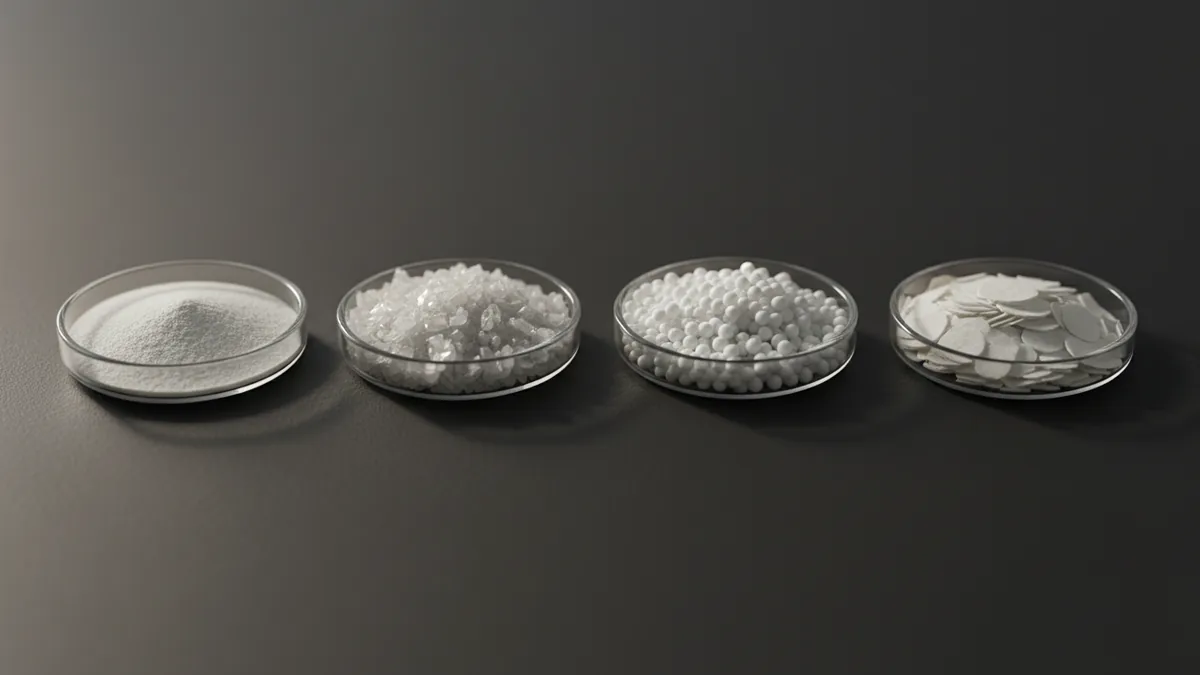
Magnesium supplements differ in two ways that matter: how much elemental magnesium you get per capsule, and how much of it you absorb. Almost everything else — the sleep claims, the brain claims, the "high potency" flag — is downstream of those two numbers.
Magnesium is never sold as pure magnesium. It is bound to something — an oxide, a citrate, an amino acid — and that partner takes up weight. So a 500 mg capsule is 500 mg of the compound, and the elemental magnesium inside it is a fraction of that:
Read that list and oxide looks like the obvious winner. Then the second number arrives. In a comparison of four US commercial magnesium preparations, oxide showed poor bioavailability — a fractional absorption of about 4% — while the organic salts tested were substantially and equivalently better absorbed. (Firoz & Graber, 2001)
A form that is 60% magnesium and barely absorbed loses to a form that is 14% magnesium and absorbed properly. That is the whole comparison in one sentence, and it is why oxide sits at the bottom of our ranking regardless of how impressive its milligram figure looks.
Magnesium chelated to the amino acid glycine. Well absorbed, and the gentlest common form on the stomach — which is why it dominates the sleep, cramp and stress research and why it is the default recommendation for anyone taking magnesium daily. Downside: low elemental percentage, so you need a physically larger dose, and it costs more per milligram of magnesium than citrate. Full ingredient page →
Magnesium bound to citric acid. Well absorbed, cheap, and widely studied. Its defining trait is that it draws water into the bowel, which makes it mildly laxative at higher doses — genuinely useful for some people, unwelcome for others. If magnesium has ever given you loose stools, this is probably why. Best value per absorbed milligram if you tolerate it. Full ingredient page →
Cheap, high elemental content, poorly absorbed. It has a legitimate clinical use as a laxative and antacid, where poor absorption is a feature rather than a flaw. As a daily magnesium supplement it is the form to skip — and the form most often used in the "500 mg magnesium!" store-brand tablets that look like a bargain.
The premium form, sold almost entirely on a cognitive claim: that it raises magnesium in the central nervous system better than other forms. That story rests largely on animal research; the human evidence for memory or cognition is early and limited rather than settled. It is also the lowest-elemental form on this list, so the large number on the tub buys the least actual magnesium of any option, at the highest price. A speculative purchase for the brain claim specifically — not a sensible way to fix a magnesium shortfall. Full ingredient page →
Both are organic salts in the same family as citrate, and both are reasonably absorbed. Malate is marketed for energy and fibromyalgia-related fatigue; taurate for cardiovascular and calming effects. The human evidence specific to each form is much thinner than for glycinate or citrate — you are mostly getting well-absorbed magnesium with a story attached. Not a bad buy, not a reason to pay a premium.
Several popular products combine five to seven forms in one capsule and market the variety itself as the benefit. There is no research showing that a mixture of forms outperforms an adequate dose of one good form. Worse, these blends frequently declare only the total and not the per-form split — so you cannot tell whether you are getting a real dose of glycinate or a decorative sprinkle of six things on top of cheap oxide.
Before choosing a form, it helps to know the number you are aiming at, since half the products on the shelf are sized for a target nobody stated.
The US recommended dietary allowance for elemental magnesium is roughly 400–420 mg a day for adult men and 310–320 mg for adult women, rising slightly after 30 and during pregnancy. That is the total from food and supplements combined, not the amount to take as a pill. (NIH Office of Dietary Supplements)
Food does a lot of that work. Leafy greens, nuts, seeds, legumes, whole grains and dark chocolate are all decent sources — a handful of pumpkin seeds carries around 150 mg. Most people are not starting from zero, which is why a supplement's job is usually to close a gap of 100–200 mg rather than to supply the whole requirement.
There is also an upper limit worth knowing, and it applies only to supplements: around 350 mg of supplemental elemental magnesium a day for adults. Past that, loose stools become likely. The limit does not apply to magnesium from food, which the body handles differently.
Marketing in this category leans hard on the idea that everyone is deficient. The truth is more boring and more useful.
Frank magnesium deficiency is uncommon in healthy people eating a normal diet, and it is a clinical condition with real symptoms. What is common is intake below the recommended amount, which is not the same thing — a gap on a food diary rather than a medical problem.
Groups genuinely more likely to run short:
A blood test is less helpful here than you would expect: only about 1% of body magnesium is in blood, and serum levels stay normal while tissue stores fall. That cuts both ways — it is also why nobody can tell you from a standard panel that you need a supplement.
Magnesium is sold for sleep more than for anything else. The evidence is thinner than the packaging suggests, and not absent.
The most-cited trial gave 500 mg of magnesium daily for eight weeks to 46 older adults with insomnia. Sleep time and sleep efficiency improved against placebo, and sleep onset latency and early-morning waking fell. (Abbasi et al., 2012)
Read the population: 46 people, all elderly, all with diagnosed insomnia, in a group where magnesium shortfall is more likely to begin with. That is a long way from a healthy 30-year-old who sleeps badly because of their phone.
Where that leaves it: reasonable to try if you sleep badly and your intake is likely low, with modest expectations and eight weeks of patience. It is not a sleeping pill and the research does not claim it is.
This is the one worth being blunt about, since it sells a lot of magnesium.
A Cochrane review — the most demanding form of evidence synthesis there is — pooled 11 trials covering 735 participants and concluded that it is unlikely magnesium supplementation provides clinically meaningful cramp prophylaxis to older adults experiencing skeletal muscle cramps. (Garrison et al., 2020)
The evidence for pregnancy-associated cramps is more mixed, which the same review notes. But the general "magnesium for cramps" pitch aimed at athletes and older adults is not supported by the best available synthesis.
If you cramp during training, the likelier culprits are fatigue, conditioning and fluid or sodium losses. The sodium arithmetic is here.
Two areas where magnesium earns more respect than the sleep and cramps marketing does.
Blood pressure. Magnesium supplementation produces small reductions in blood pressure across pooled trials — modest in size, consistent in direction, and larger in people who were short of magnesium or hypertensive to begin with. Not a treatment, a nudge.
Migraine. Magnesium has a place in migraine prophylaxis that several neurological bodies recognise, at doses higher than general supplementation. That is a clinical use to discuss with a doctor rather than a self-directed one.
Neither justifies the general "everyone should take magnesium" framing. Both are better evidence than most of what the category advertises.
Magnesium interferes with the absorption of several common medications, and the fix is usually timing rather than avoidance.
With. It improves tolerance and reduces the chance of an upset stomach, and there is no meaningful absorption penalty.
Evening is the common recommendation if sleep is the goal, and it does no harm otherwise. Consistency matters more than the hour.
Split, if you are taking more than about 200 mg. Absorption of magnesium falls as the single dose rises, so two smaller doses deliver more than one large one — and are gentler on the gut.
Sprays, flakes and bath salts are sold on the claim that magnesium absorbs through skin. The evidence for meaningful transdermal absorption is weak. An Epsom salt bath may be pleasant and relaxing; treating it as a way to raise magnesium status is not supported.
If you are correcting a shortfall, weeks rather than days. If you are not short of magnesium, adding more does not produce a benefit — the body excretes the excess, which is the whole reason the "everyone is deficient" pitch exists.
Run a product through the Label Dose Checker →
From food, no — the kidneys handle it. From supplements, doses above roughly 350 mg a day of elemental magnesium commonly cause diarrhoea, and much higher doses can cause more serious problems, particularly if kidney function is impaired.
The evidence is preliminary and the trials are small. Plausible, unproven, and not a reason to delay treatment for anxiety that is affecting your life.
There is no problem combining them, and magnesium is involved in vitamin D metabolism. Combination products are fine as long as each ingredient is at a real dose and the label says what those doses are.
Glycinate is the usual recommendation, partly for absorption and partly because glycine itself has some sleep research behind it. The evidence comparing forms head-to-head for sleep does not really exist — the trials used plain magnesium salts.
It is the cheapest form to manufacture and it has the highest elemental percentage, so it produces the largest number on the front of the pack for the lowest cost. The label looks strong and the absorption is poor, which is the whole reason this guide exists.
Magnesium marketing lists symptoms so broad they describe being alive — tiredness, poor sleep, low mood, muscle twitches. Worth separating what a genuine deficiency does from what a slightly low intake does.
Clinical deficiency is a medical condition, and it is uncommon in healthy people eating normally. It produces real signs: muscle weakness, tremor, abnormal heart rhythms, numbness, and in severe cases seizures. It is diagnosed and treated by a doctor, not managed with a tub from a shelf.
Intake below the recommended amount is common and much less dramatic. It has no reliable symptom you could point at, which is exactly why the category can attribute anything to it. If you feel tired, magnesium is one of perhaps thirty plausible explanations and rarely the most likely.
The honest position: a supplement is worth taking if your diet is genuinely low in magnesium-rich foods, or if you are in one of the higher-risk groups. It is not a diagnosis for feeling below par.
Cheaper, better absorbed in the context of a meal, and it comes with everything else in the food. Approximate elemental magnesium per typical portion:
| Food | Portion | Magnesium (approx.) |
|---|---|---|
| Pumpkin seeds | 30 g handful | 150 mg |
| Almonds | 30 g handful | 80 mg |
| Spinach, cooked | 100 g | 80 mg |
| Black beans | 100 g cooked | 70 mg |
| Dark chocolate, 70%+ | 30 g | 65 mg |
| Oats | 50 g dry | 55 mg |
| Avocado | 1 medium | 45 mg |
Two of those a day covers a large share of the requirement. A supplement's realistic job is to close what remains, which is why the 200–300 mg products make more sense than the 500 mg ones.
A minor claim in the marketing and a fair one to check, since magnesium is involved in muscle contraction and energy metabolism.
The evidence for performance benefits in people who are not deficient is weak. Correcting a genuine shortfall can improve how someone performs; adding magnesium on top of adequate intake has not been shown to do much. This is the pattern for most micronutrients, and it is the opposite of how supplements are sold.
Heavy training does increase magnesium losses through sweat and urine, which makes adequate intake more relevant for athletes than for sedentary people. Adequate, not extra.
The whole guide, compressed into a decision:
| Your goal | Form | Why |
|---|---|---|
| Daily top-up, sleep, general shortfall | Glycinate | Well absorbed, gentlest on the gut, best-studied for these uses |
| Same, on a budget | Citrate | Well absorbed, cheap, mildly laxative at higher doses |
| Constipation | Citrate or oxide | Poor absorption is the point here |
| Cognitive claims | L-threonate | The only form with that specific claim, and the claim is unsettled |
| Lowest cost per milligram | Oxide | Cheapest, and you absorb little of it. Our review → |
| Migraine prophylaxis | Ask a doctor | Clinical doses, clinical supervision |
Products combining five, six or seven magnesium forms have become one of the category's best sellers, and the pitch deserves a proper answer rather than a dismissal.
The argument goes that different forms are absorbed by different pathways and serve different tissues, so a blend covers more ground than any single form. It is not absurd. It is also not demonstrated — there is no research showing that a mixture of forms outperforms an adequate dose of one well-absorbed form for any outcome.
The practical problem is worse than the theoretical one. Most of these products declare a single total for magnesium and do not break it down per form. So a tub can be 80% cheap oxide with a decorative sprinkle of six others, and the label will look identical to one that is mostly glycinate. You cannot tell, and that is the point of not printing it.
If you like the idea of a blend, look for one that publishes the split. If it does not, you are paying a premium for a formula you are not allowed to see. How that plays out in our ranking →
A confusion that runs through the whole category, and it explains why supplement doses look inconsistent with official guidance.
The RDA — around 400 mg for men, 310 mg for women — is the total daily intake from all sources that covers the needs of nearly everyone. It is a public-health number, built for populations.
The studied dose in a trial is what researchers gave on top of whatever participants were already eating, usually 200–400 mg of supplemental elemental magnesium. That is the range our dose bars measure against, since it is the amount that was actually tested for an effect.
The two numbers answer different questions. "Am I getting enough in total?" is the RDA. "Is this product dosed like the research?" is the studied range. A product at 200 mg is not half a dose — it is a sensible top-up for someone already eating reasonably.
One of the better-supported associations, and one the marketing rarely leads with because it is not exciting.
People with type 2 diabetes tend to run lower on magnesium, partly through increased urinary loss, and low magnesium status is associated with poorer insulin sensitivity. Supplementation in people who are deficient or diabetic produces small improvements in glycaemic markers across pooled trials.
The familiar pattern again: it helps where something was short, and does little where nothing was missing. If you have type 2 diabetes, magnesium status is worth raising with your doctor — both because a shortfall is more likely and because some diabetes medications interact.
Every product in the ranking runs through the same three inputs, and this category exposes the first one unusually clearly.
A product loses ground for a proprietary blend that hides the per-form split, for oxide sold at a premium price, and for the absence of third-party testing on something marketed for daily use. It gains nothing for packaging, brand or the number on the front of the tub. The full method →
Written and fact-checked by the NFS editorial team · Educational only — not medical advice.