Independent supplement ratingsUS and Canada · Updated weekly

A ratings desk for a category that has spent thirty years grading its own homework.
A ratings desk for a category that has spent thirty years grading its own homework.
The most-studied supplement there is, cut down to what the research supports: 3–5 g a day, timing optional, and skip the fancy forms.
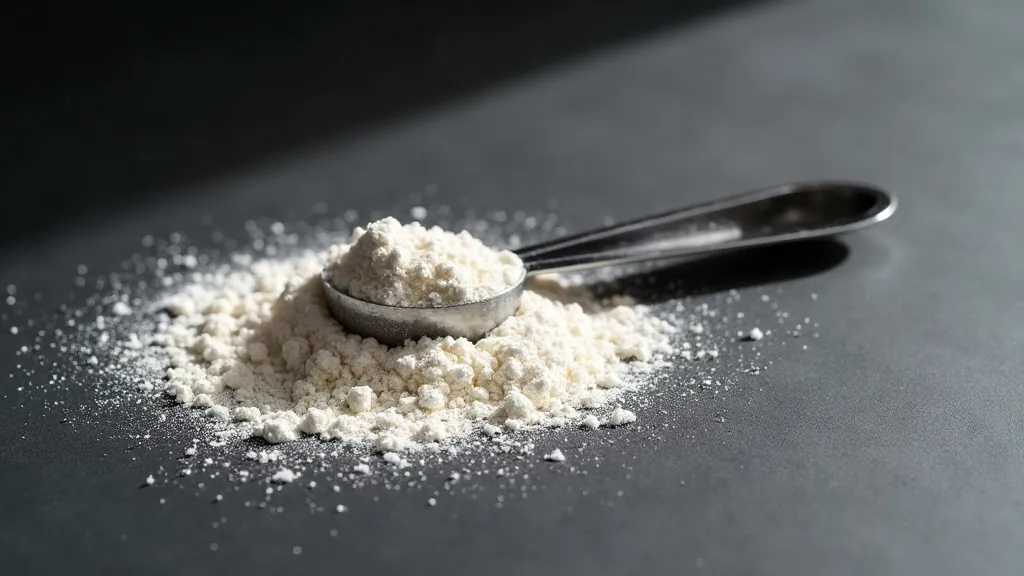
The short answer: take 3–5 grams of creatine monohydrate every day, at any time you'll remember, forever. You don't need to load, you don't need to cycle, and and on the evidence you don't need the pricier "advanced" forms. Creatine is the most-researched supplement in sport, and the research is refreshingly boring.
Creatine helps your muscles regenerate energy (ATP) during short, hard efforts, which lets you squeeze out an extra rep or two and recover faster between sets. Over months, those extra reps add up to more strength and muscle. This is one of the few supplements with decades of consistent human evidence behind it: the International Society of Sports Nutrition's 2017 position stand calls creatine monohydrate "the most effective ergogenic nutritional supplement currently available" for building lean mass and high-intensity performance. (Kreider et al., 2017)
A daily maintenance dose of 3–5 g keeps your muscles saturated with creatine. That's it. More than 5 g a day doesn't build more muscle — it mostly ends up in the toilet. A slightly bigger person or a heavier trainer sits at the top of that range; most people are fine at 5 g flat.
No — loading is optional, and it only changes how fast you get there, not where you end up. Two routes to the same saturated muscle:
Unless you have a competition in two weeks, skip the load and just start at 5 g a day.
Barely. Creatine works by keeping your muscles topped up over time, so the day you don't miss matters far more than the hour you take it. Take it whenever you'll actually remember — with a meal, in your shake, morning or night. Consistency is the whole game.
This is where money gets wasted. Creatine monohydrate is the form used in almost all the research, it's the cheapest, and nothing has reliably beaten it.
| Form | Verdict |
|---|---|
| Monohydrate | The gold standard. Most studied, cheapest, works. Buy this. |
| Micronized monohydrate | Same thing, just ground finer so it mixes better. Fine to buy; not "better". |
| Creatine HCl | Marketed as needing a smaller dose. No good evidence it out-performs monohydrate. You pay more for less proof. |
| Buffered ("Kre-Alkalyn") | A head-to-head trial found it no better than monohydrate. Skip. |
| Liquid / "ethyl ester" | Less stable or less effective. Avoid. |
If a creatine costs three times as much as monohydrate, you're paying for the label, not the effect.
For healthy people, the evidence says yes — this is one of the most-scrutinised supplements there is, and the ISSN position stand concludes it's safe at recommended doses, including the long-term. The old "creatine wrecks your kidneys" line isn't supported in healthy individuals; it comes from a misreading of how creatine nudges a lab marker (creatinine) without actually harming kidney function. If you have existing kidney disease, that's a conversation for your doctor — as with any supplement.
A detail the marketing skips: creatine does not work equally for everyone. Roughly a fifth to a third of people are "non-responders" — their muscle creatine is already near saturation, usually because they eat a lot of red meat and fish, which contain creatine naturally.
If you are one of them, supplementing tops up a tank that is already full and you feel nothing. That is not a defective product or a bad batch; it is a body that was already where the supplement was trying to take it. Vegetarians and vegans sit at the other extreme — they typically start lowest and see the biggest change.
Expect the scale to move up by roughly one to two kilograms in the first weeks. Creatine pulls water into muscle cells, and that water has weight. It is intracellular — inside the muscle, not under the skin — so it does not make you look softer. If anything it makes muscles look slightly fuller.
Two practical consequences. If you compete in a weight class, plan for it. And if you are tracking fat loss, do not panic at week two — that jump is not a failed diet, and it happens once rather than continuing.
It is not a pre-workout. It has no acute effect you will feel in the session, no stimulant action, and taking a big dose an hour before training does nothing extra. The effect comes from saturation built over days, which is exactly why the timing question is so boring.
It is also not a fat burner, not a testosterone booster, and not a substitute for training hard. It lets you do slightly more work; the work is still the thing that builds the muscle.
Most creatine research is about performance, but the ISSN position stand also reviews a wider set of potential applications — including cognition and neuroprotection, where the evidence is genuinely early rather than settled. Some of the more interesting signals show up in sleep-deprived or stressed states rather than in well-rested people.
Treat that as a footnote, not a reason to buy. The strength and muscle case is solid; the brain case is a research area, and anyone selling you creatine primarily on cognition is running ahead of the data.
A large tub of monohydrate costs less per month than a single coffee shop visit. This is the rare supplement where the honest answer is genuinely cheap.
No. There is no evidence that your body stops responding or that natural production is permanently suppressed. Cycling is a habit borrowed from drugs that behave nothing like creatine.
This comes from a single small study in rugby players that found a rise in DHT, a hormone associated with male pattern baldness. It has not been replicated, and no study has actually measured hair loss. Worth knowing about; not established.
The opposite of the folklore: reviews of the evidence find no increase in cramping, and if anything creatine may help with fluid retention in hot conditions.
Yes, on the same terms — the mechanism has nothing to do with sex hormones, and the dose is the same 3–5 g. The idea that it makes women "bulky" is the same myth applied to lifting generally.
Anything you like — water, juice, a shake, coffee. It is stable enough in a drink you make and finish. Hot liquids over long periods will degrade it, so don't leave it in tea all afternoon.
Worth understanding, since it explains every practical rule that follows.
The fuel a muscle spends in the first seconds of hard effort is ATP, and a muscle holds only a few seconds' worth. To keep going it has to rebuild ATP, and the fastest route is a molecule called phosphocreatine handing over a phosphate group. That system runs the show for roughly the first ten seconds of maximal work — a heavy set, a sprint, a jump.
Your phosphocreatine store is the limit on how long that fast route lasts. Supplementing raises muscle creatine by around 20%, which extends the runway slightly. Not dramatically. Enough for an extra rep or two at the same weight, or slightly faster recovery between sets.
Everything else follows from that. Creatine has no acute kick, so timing barely matters. The effect depends on saturation, so consistency matters more than dose size. And it does nothing for a marathon, where the phosphocreatine system stopped being relevant in the first minute.
Extra reps compound over months, and that is where creatine's reputation comes from. Across the research, supplementation alongside resistance training reliably produces greater gains in strength and lean mass than training alone — modest per session, meaningful per year.
The clearest way to picture it: creatine does not add muscle. It lets you train slightly harder, and the extra training adds the muscle. Take the supplement without the training and you get water weight.
The effect is largest where the phosphocreatine system does the most work — heavy lifting, sprints, jumps, repeated short efforts in field sports. It shrinks toward zero as efforts get longer and steadier.
The loading protocol comes from real research, and so does the reason you can skip it.
Hultman and colleagues compared two approaches. One group took 20 g a day for six days. Another took 3 g a day for 28 days. Muscle total creatine rose by about 20% in both — the loading group got there in under a week, the low-dose group got to the same place a month later. (Hultman et al., 1996)
Same destination, different speed. So the choice is simple: load if you have a reason to be saturated quickly — a competition, a training block starting Monday, impatience. Otherwise take 3–5 g a day and stop thinking about it.
The one real cost of loading is gastrointestinal. 20 g in one go upsets a lot of stomachs. Splitting it into four 5 g doses across the day fixes that for most people.
Creatine uptake is improved somewhat by insulin, which is why the old advice was to take it with grape juice. The effect is real and small.
Taking creatine with a meal is a reasonable habit — it nudges uptake and it is easier to remember than a standalone dose. Buying a product that bundles creatine with sugar and charges a premium for the combination is not. You have carbohydrate at home.
Anything marketed as improving absorption beyond that — special transport systems, buffered pH, esterified forms — is selling a solution to a problem monohydrate does not have. Monohydrate absorbs at close to 100%.
| Form | The pitch | The reality |
|---|---|---|
| Monohydrate | The original | The most studied, the cheapest, the benchmark everything else is measured against and fails to beat. |
| Creatine HCl | More soluble, smaller dose needed | More soluble, yes. No evidence the smaller dose produces the same saturation. |
| Buffered (Kre-Alkalyn) | Survives stomach acid better | Tested against monohydrate and did not outperform it. Monohydrate was not being destroyed in the first place. |
| Ethyl ester | Better absorption | Degrades to creatinine, an inactive waste product, faster than monohydrate does. |
| Liquid creatine | Convenient | Creatine is unstable in solution over time. You are buying partly-degraded product. |
| Creapure | German-made, high purity | Still monohydrate. A purity standard rather than a different molecule. A small premium that is defensible. |
The pattern is consistent: every alternative form exists to solve a marketing problem, which is that monohydrate is cheap and unpatentable. If a form costs three times as much, you are paying for the story.
One of the more useful findings, and one of the least advertised, because the audience is not the one supplement brands target.
A meta-analysis of 22 randomised controlled trials covering 721 middle-aged and older adults found that creatine alongside resistance training produced significantly greater gains than training alone: an extra 1.4 kg of lean tissue mass, plus greater upper- and lower-body strength. (Chilibeck et al., 2017)
In someone in their sixties, 1.4 kg of muscle is not a cosmetic result. Muscle mass and strength track with the ability to climb stairs, carry shopping and get up off the floor unaided. A cheap, well-tolerated supplement that adds measurably to that, alongside training, is a genuinely good deal.
The same rules apply: 3–5 g a day, resistance training in the picture, and a conversation with a doctor if kidney function is already a known issue.
Your brain uses the same phosphocreatine system your muscles do, and it is metabolically expensive, which is why cognition became a research area.
The honest state of it: interesting, unsettled. The clearest signals show up when the brain is under stress — sleep deprivation, mental fatigue, or in vegetarians whose baseline creatine is lowest. In well-rested people eating meat, the effects on cognition are small and inconsistent.
Treat it as a possible bonus rather than a reason to buy. The strength case is settled; the cognition case is a research programme, and any brand leading with brain benefits is running ahead of what the evidence supports.
Creatine occurs naturally in meat and fish, roughly 1–2 g per pound of raw meat. People who eat none of it start with lower muscle creatine stores.
Lower starting point, more room to fill. Vegetarians and vegans typically show larger increases in muscle creatine and, in some studies, larger performance gains than omnivores from the same dose.
If you don't eat meat and you lift, this is probably the highest-value supplement available to you. And commercial creatine monohydrate is synthesised, not extracted from animals — it is suitable for a vegan diet, though checking for a vegan certification on the tub is reasonable if capsules are involved, since the shells often are not.
Creatine is among the most scrutinised supplements in existence, and the ISSN position stand concludes it is safe at recommended doses, including over the long term, in healthy people.
Creatine raises blood creatinine, a waste product doctors use to estimate kidney function. Higher creatinine on a blood test usually suggests kidneys are working less well. In someone taking creatine, it mostly reflects the supplement.
The practical consequence: tell your doctor you take creatine before a blood test, or you may be investigated for a kidney problem you do not have. The marker moves; the function does not.
Studies have followed people taking creatine for periods measured in years without finding harm to kidney or liver function in healthy individuals. It is not a short-term-only supplement.
The research skews heavily male, which is a genuine gap rather than a reason to assume it works differently. What exists suggests women respond in the same direction, from the same dose, through the same mechanism — none of which involves testosterone or anything sex-specific.
Two points that come up constantly:
It will not make you bulky. Creatine adds water inside muscle cells and lets you train slightly harder. Neither produces the outcome the word "bulky" describes, which requires years of deliberate training and eating.
The scale will move, once. A kilogram or two of intracellular water in the first weeks. If a number on a scale is going to derail you, know it is coming and judge progress by how training feels instead.
There is early interest in creatine around menopause, where muscle and bone loss accelerate, and around the effects of the menstrual cycle on creatine metabolism. Interesting, unfinished, not yet a basis for different advice.
The most common reason people abandon creatine is expecting the wrong thing on the wrong schedule.
Which is why judging creatine on how you feel is a mistake. There is no feeling. Judge it on the numbers in your log across a training block.
An old study suggested caffeine might blunt creatine's ergogenic effect, and the idea has circulated ever since.
The evidence for a meaningful interaction is weak and has not held up. Plenty of people take both, plenty of studies use both, and no consistent problem has emerged. If you want to be cautious, separate a large caffeine dose from your creatine by a few hours — but this is not a real constraint on either.
The genuine overlap is that both frequently appear in pre-workout blends at doses that make no sense: too little creatine to saturate, too much caffeine to sleep. The caffeine numbers are here.
Two applications outside the gym worth knowing about, both better established than the cognition claims.
Injury and immobilisation. Muscle lost during a period in a cast or off training comes back faster with creatine alongside rehabilitation, in the studies that have looked. If you are coming back from an injury, it is cheap insurance.
Sarcopenia. Age-related muscle loss is the application with the strongest case outside sport, and the meta-analysis above is the reason. Combined with resistance training, in people over 50, it does measurably more than training alone.
Buy plain creatine monohydrate. Take 5 g a day, every day, whenever suits you. Don't bother loading unless you're in a hurry, don't cycle it, and don't pay extra for a fancier molecule. It's the rare supplement that's cheap, boring, and actually works.
Written and fact-checked by the NFS editorial team · Last updated 06 Aug 2026. Educational only — not medical advice.