Independent supplement ratingsUS and Canada · Updated weekly

A ratings desk for a category that has spent thirty years grading its own homework.
A ratings desk for a category that has spent thirty years grading its own homework.
A meta-analysis of five randomised trials found a genuine increase in testosterone. Three conditions come attached, and the labels mention none of them.
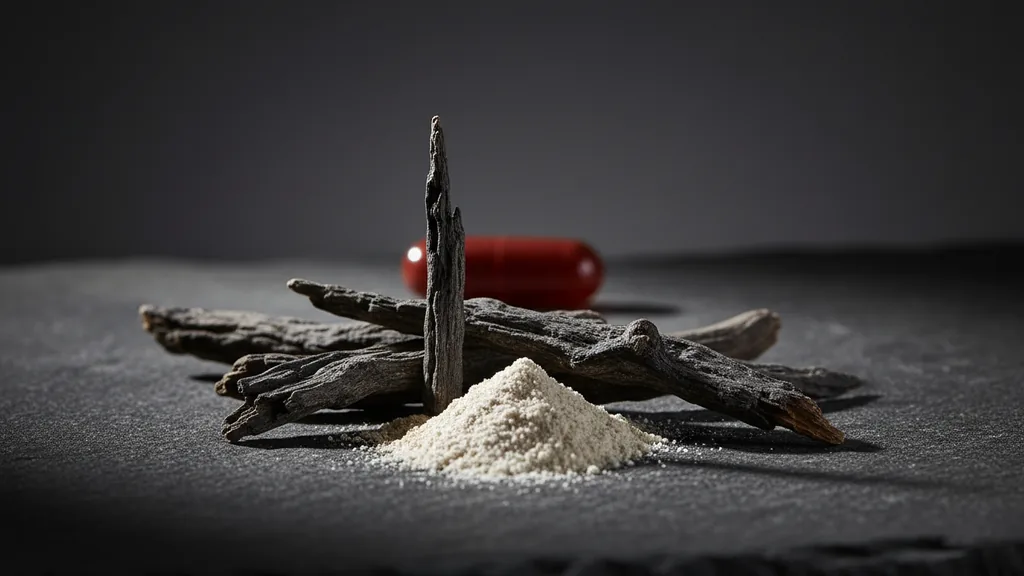
The short version: almost nothing in the testosterone category survives contact with the evidence. Tongkat ali does. A 2022 meta-analysis of five randomised trials found a significant increase in total testosterone, and two well-run trials back it up. But three conditions come attached — the men studied, the extract used, and one trial that cannot separate the supplement from the exercise — and no label mentions any of them.
A 2022 systematic review and meta-analysis followed PRISMA, screened six databases, and pooled five randomised clinical trials. Eurycoma longifolia produced a significant increase in total testosterone — SMD 1.352 (95% CI 0.565–2.138, p = 0.001) — and the effect held in the subgroup of men who were hypogonadal at baseline. (Leisegang et al., 2022)
The authors describe it as a possible and promising option that needs more research before clinical use. That is a careful sentence, and it is still the strongest thing anyone can say about an ingredient in this category.
A 12-week trial of a standardised aqueous root extract in ageing men found serum total testosterone rising in the 200 mg group, with fatigue scores and quality-of-life measures improving from week two onwards. DHEA rose, cortisol fell, muscle strength improved by week twelve, and SHBG did not move. No safety-relevant changes appeared. (Chinnappan et al., 2021)
A six-month randomised trial in men with androgen deficiency of the ageing male combined 200 mg of Eurycoma longifolia with supervised training three times a week. Erectile function improved in both arms, most in the group getting both, and total testosterone rose.
Now the honest part, which the authors state themselves: the study had no arm taking the supplement alone and no arm training alone. So it shows the combination works. It cannot tell you how much of that was the capsule. (Leitão et al., 2021)
Six months of structured exercise raises testosterone and improves erectile function on its own. A trial designed this way cannot separate the two, and a marketing department quoting it will not tell you that.
The effect is clearest in hypogonadal and ageing men — the meta-analysis says so explicitly, and both trials above recruited exactly those groups. Nothing here establishes that a 28-year-old with testosterone in the middle of the range gains anything.
Both trials used a standardised aqueous root extract at 200 mg, one of them a named commercial preparation. Tongkat ali sold as raw root powder, or at an unnamed concentration, is not the material that was tested. Our ingredient page keeps the studied dose next to the evidence for that reason.
Two hundred milligrams is a modest amount, which makes it easy to include honestly — and easy to include decoratively. In our testosterone ranking, the products that name tongkat ali mostly fold it into a blend, so the amount cannot be checked. Prime Male is the one that discloses its doses; whether each active reaches its studied amount is what the review works through.
Tongkat ali earns a C on our evidence scale — not because the trials are bad, but because there are few of them, they are small, and the population is narrow. It is the best-supported ingredient in a category where 61.5% of ingredients have no published data at all. That is a low bar cleared honestly.
If you are an older man with symptoms and a blood test that agrees, a standardised 200 mg extract is among the few things here with a case. If you are young, well and hoping for an edge, the evidence has not been collected in anyone like you.
Educational only, not medical advice. Low testosterone is a clinical diagnosis made with a blood test. Tongkat ali has not been studied for long-term use, and if you take medication, ask a clinician first.