Independent supplement ratingsUS and Canada · Updated weekly

A ratings desk for a category that has spent thirty years grading its own homework.
A ratings desk for a category that has spent thirty years grading its own homework.
They raise muscle protein synthesis on paper — and do almost nothing extra once your protein is handled. The honest verdict.
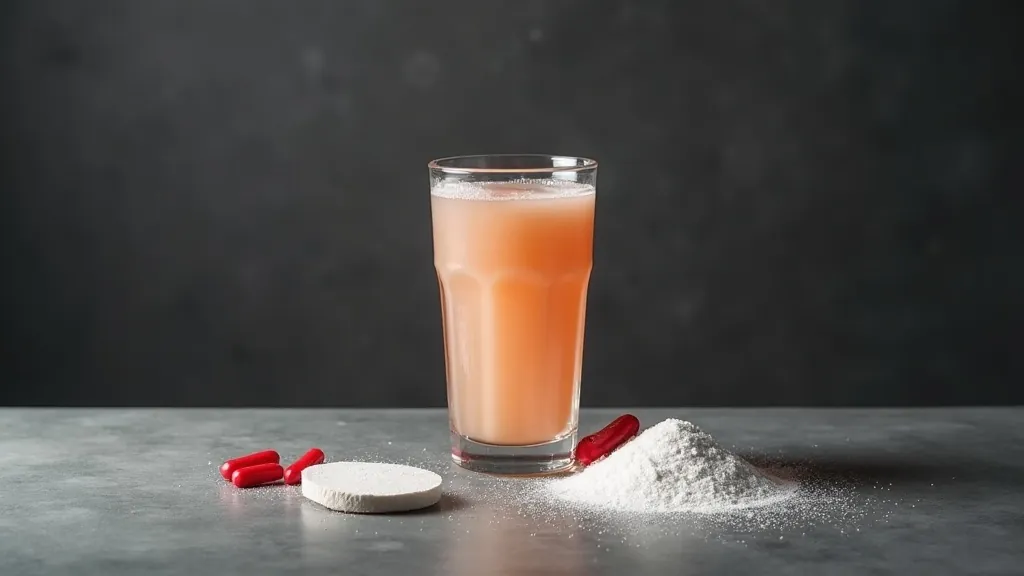
The short answer: if you already eat enough protein, BCAAs are a waste of money. They do a little something in isolation, but a normal protein intake — or a cheap scoop of whey — already contains them, plus everything else your muscles actually need. The flavoured BCAA tub is one of the supplement industry's better marketing tricks.
Branched-chain amino acids — leucine, isoleucine and valine — are involved in triggering muscle protein synthesis (MPS), the process that builds muscle. And in a controlled study, taking BCAAs alone after training did raise myofibrillar MPS by about 22% versus a placebo. (Jackman et al., 2017) That's the sentence every BCAA ad is built on.
Here's the catch the ads leave out: raising MPS with BCAAs alone is like turning on a construction crew with only three of the materials it needs. Muscle is built from all nine essential amino acids; give the body just three, and it can only do so much before it runs out of the rest. The same study's response was still well below what you get from a dose of whole protein or complete essential amino acids, which supply the full set.
And critically: if your daily protein is already adequate — around 1.6 g/kg, as the research on muscle growth suggests — you are already eating plenty of BCAAs, spread across your meals. Adding a separate BCAA supplement on top doesn't give your muscles anything they didn't already have.
The one narrow case where BCAAs might have a role is training fasted for long periods with no protein anywhere near your session — and even then, a little whole protein does the job better.
The Jackman result is real: BCAAs alone did raise muscle protein synthesis by about 22% over placebo. But the sentence that follows in the paper is the one the ads leave out — the response was less than half what is typically seen from a dose of whole protein containing the same amount of leucine.
So the honest summary is not "BCAAs don't work". It is "BCAAs do a fraction of what the cheaper, more complete option does". Which is a much worse pitch, and a much more accurate one.
Muscle protein is built from twenty amino acids, nine of which your body cannot make. BCAAs supply three of those nine. Leucine acts as the signal that starts construction — but a signal without materials produces very little.
The body's short-term answer is to scavenge the missing six from its own tissue, which rather defeats the purpose. This is exactly why EAAs (all nine essential amino acids) outperform BCAAs in head-to-head work, and why whole protein outperforms both while costing less.
BCAA tubs sell on flavour. A sweetened, near-zero-calorie drink that makes you sip water through a long session is a genuine, if modest, benefit — people who drink flavoured water drink more of it.
Just price it correctly. You are buying a training-day squash, not a muscle-building supplement. A tub of flavoured amino acids at $1 a serving is expensive squash.
This is the strongest remaining case, and it is narrower than it sounds. If you train genuinely fasted — no protein for many hours before or after — a small dose of amino acids beforehand may limit muscle breakdown during the session.
But EAAs do that job better, and 20–25 g of whey does it better still while also supplying the materials. "Fasted training" where you eat protein within an hour or two either side is not the scenario the argument depends on. That is most people.
Take the price of a month of BCAAs and compare:
Clinical populations are a different question. BCAAs have genuine therapeutic uses — in liver disease, and in some cases of muscle wasting — where the starting point is not a healthy person eating enough protein. Those findings do not transfer to a lifter with a normal diet, and are often the studies quoted at you when they do get cited.
Very low protein intakes. Nearly all the "BCAAs add nothing" evidence assumes adequate protein. If someone genuinely eats very little protein, the picture is less clear — but the fix there is obviously protein, not amino acid powder.
Soreness claims are weak. Some studies report slightly less muscle soreness with BCAAs. The effect is small, inconsistent, and does not translate into better performance or more muscle.
Better than BCAAs, still beaten by whole protein on cost per useful gram. Reasonable if you cannot tolerate whey and want something to sip during training.
Yes — they contain calories and they trigger an insulin response. If you fast for a specific reason, they are not a loophole.
For healthy people at label doses, yes. They are amino acids you already eat every day.
Because they have been marketed hard for thirty years, they taste good, and sponsorship is a business. Popularity in a gym is not evidence.
Hit your daily protein target and BCAAs add nothing worth paying for. Spend the money on protein and creatine, and treat the BCAA tub for what it is: a nicely-flavoured way to sell you amino acids you're already eating.
Written and fact-checked by the NFS editorial team · Last updated 06 Aug 2026. Educational only — not medical or dietary advice.