Independent supplement ratingsUS and Canada · Updated weekly

A ratings desk for a category that has spent thirty years grading its own homework.
A ratings desk for a category that has spent thirty years grading its own homework.
The research-backed number is lower than the industry wants you to think — and past it, more protein builds no more muscle.
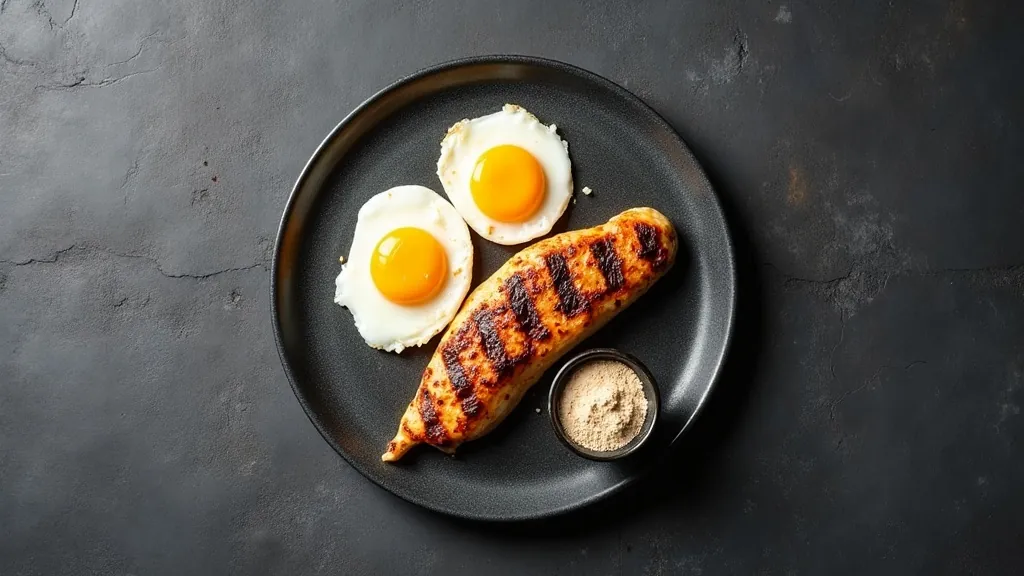
The short answer: to build muscle, aim for roughly 1.6 grams of protein per kilogram of body weight per day — about 0.7 g per pound. That isn't a supplement-industry number. It's the point where the best evidence says the muscle-building payoff of eating more protein flattens out.
The most-cited work here is a 2018 systematic review and meta-analysis by Morton and colleagues in the British Journal of Sports Medicine. It pooled 49 studies and 1,863 people doing resistance training, and found that eating more protein clearly increased gains in muscle size and strength — but the benefit to lean mass plateaued at about 1.62 g/kg/day. Beyond that, extra protein produced no extra muscle. (Morton et al., 2018)
The International Society of Sports Nutrition reaches the same conclusion from the other direction. Its 2017 position stand on protein and exercise states that a daily intake of 1.4–2.0 g/kg/day is sufficient to build and maintain muscle for most people who train. (Jäger et al., 2017)
So the honest working range is 1.4–2.0 g/kg, and ~1.6 is a sensible middle target for someone lifting to gain muscle. The number you see on some tubs and in some gym lore — 2 g per pound, which is closer to 4.4 g/kg — has no support in this data. It just sells more protein.
| Body weight | Target at 1.6 g/kg | Upper end (2.0 g/kg) |
|---|---|---|
| 60 kg / 132 lb | 96 g | 120 g |
| 70 kg / 154 lb | 112 g | 140 g |
| 80 kg / 176 lb | 128 g | 160 g |
| 90 kg / 198 lb | 144 g | 180 g |
| 100 kg / 220 lb | 160 g | 200 g |
Want it for your exact weight and goal? Our protein intake calculator does the maths, including the per-meal figure below.
Total daily protein matters most — hit the number and you've done 90% of the job. Distribution is the smaller lever on top: research on protein timing suggests muscle protein synthesis is best supported by roughly 0.4 g/kg per meal across three to four meals, rather than one giant serving. (Schoenfeld & Aragon, 2018) For an 80 kg lifter, that's about 30 g of protein at each of four meals — not something you need a shake to hit.
No. Food first, every time. Chicken, eggs, dairy, fish, tofu and legumes will get most people to 1.6 g/kg without a scoop of anything. A protein powder is a convenience — a cheap, well-absorbed way to top up when whole food isn't practical — not a requirement and not magic. If you do buy one, buy it for cost per gram of protein and a clean label, which is exactly how we rate products across the site. It won't out-perform the same protein from a meal.
Two situations push you toward the top of the range, or just past it:
Outside those cases, going well above ~1.6 g/kg isn't harmful for people with healthy kidneys — it just doesn't build extra muscle. It's money and appetite spent for no return.
Grams per kilogram is a useless unit at the supermarket, so here is the same target in food. These are approximate protein figures for common portions — enough to plan with, not enough to argue about.
A 75 kg person targeting 120 g gets there with yoghurt at breakfast, a tin of tuna at lunch, a chicken breast at dinner and a shake somewhere in between. That is the whole trick. Most people who "can't hit their protein" are eating three meals that average 15 g each and making up the difference in the evening, which does not work.
Less than the supplement industry would like. The total is what does the heavy lifting, and the evidence for a strict per-meal protocol is much weaker than the evidence for the daily number.
That said, a sensible default is three to four meals of 25–40 g. Each of those clears the amount of leucine that reliably switches on muscle protein synthesis, and spreading it stops the practical problem above — the day where you arrive at dinner needing 90 g of protein in one sitting.
The "you can only absorb 30 g at a time" line you will have heard is a myth. You absorb all of it; the question is only how much goes toward building muscle versus being used for energy, and that difference is smaller than the headline suggests.
No. Powder is food that is convenient and cheap per gram, not a supplement with an effect of its own. Morton's meta-analysis measured protein intake, not protein powder — a chicken breast counts identically.
Buy powder if it solves a logistics problem: you train at lunchtime, you don't eat breakfast, you struggle to reach the number from food alone. Don't buy it expecting anything the food wouldn't do.
Three honest gaps, because a number this widely quoted deserves its edges shown.
The plateau is an average, not your number. 1.62 g/kg is where the group-level benefit flattened. Morton's own confidence interval reached up to about 2.2 g/kg, which is why the ISSN's wider 1.4–2.0 range is the more honest way to state it.
Body weight is a crude denominator. The target scales to what you weigh, and fat tissue does not need protein. Someone carrying a lot of body fat is better served by calculating from an estimate of lean mass, or simply from goal weight.
Dieting probably raises the number. Most of this research is in people eating enough. In a calorie deficit, protein needs go up — protecting muscle while losing fat is a harder job. This is why the "lose fat, keep muscle" setting in our calculator sits at the top of the range.
In people with healthy kidneys, higher protein intakes in this range have not been shown to cause kidney damage. If you have existing kidney disease, protein intake is genuinely a clinical question and belongs with your doctor, not with a website.
No. The "anabolic window" is far wider than the shaker-in-the-changing-room ritual implies. Hitting the daily total matters more than the clock.
Yes, with a bit more planning. Plant proteins are generally lower in leucine, so the practical answer is to aim for the upper half of the range and to lean on soy, legumes, seitan and a pea or soy powder rather than trying to reach it from vegetables.
Older adults appear to need more protein, not less, to get the same muscle-building response — the machinery becomes less sensitive with age. The upper end of the range is the sensible starting point.
The daily total is the headline, and it hides a second variable. Two foods can carry the same grams of protein and deliver a different result, and the reason is the amino acid mix inside them.
Muscle is built from twenty amino acids, nine of which the body cannot make. One of those nine, leucine, does double duty: it is a building block and the trigger that switches muscle protein synthesis on. A serving that clears roughly 2–3 g of leucine flips that switch reliably. A serving that falls short of it contributes material without giving the order to build.
Animal proteins clear the threshold easily at ordinary portion sizes. Whey is the extreme case at roughly 10–11% leucine, which is why a 25 g scoop does the job. Most plant proteins sit lower and are short of one amino acid or another — rice is low in lysine, legumes are low in methionine.
Nutrition science scores this with digestibility measures, PDCAAS and its successor DIAAS. The practical version is shorter: if you eat animal protein, the quality question is handled. If you eat mostly plants, you fix it two ways — eat more total protein, and vary your sources across the day so the gaps in one are covered by another. Rice with beans is the oldest example, and it works.
The honest read on the current evidence: when total protein is matched and high enough, the gap between plant-based and animal-based diets for muscle gain narrows to something small, and possibly to nothing.
That "matched and high enough" carries weight. Studies that find animal protein superior usually compare equal grams rather than equal leucine, and the plant arm quietly ends up under-dosed on the amino acids that matter. Give the plant-based group more total protein and a mix of sources, and the difference shrinks.
What this means for a vegan or mostly-plant eater:
None of this makes plant-based lifting harder in any meaningful sense. It makes it slightly more deliberate.
Most protein research runs in people eating enough food. Cut calories and the job changes — the body starts looking for tissue to break down, and protein is what argues against it choosing muscle.
The clearest demonstration is a four-week trial that put young men in a severe deficit, roughly 40% below their requirements, with six days a week of resistance and interval training. One group ate 1.2 g/kg of protein, the other 2.4 g/kg. The higher-protein group gained 1.2 kg of lean mass while dieting; the lower-protein group gained 0.1 kg. The higher-protein group also lost more fat: 4.8 kg against 3.5 kg. (Longland et al., 2016)
Two cautions before you take 2.4 g/kg as your new number. That was a short, extreme protocol in young trained men under supervision, and the deficit was far steeper than anyone should run for long. But the direction is consistent with everything else in this area: the harder you diet, the more protein earns its place. Somewhere between 1.8 and 2.4 g/kg is the sensible band while cutting, which is why our calculator puts the fat-loss setting at the top of the range.
Older adults need more protein per kilogram than younger ones, not less, and it is one of the most under-communicated findings in nutrition.
The mechanism is called anabolic resistance. The same 20 g of protein that produces a solid muscle-building response at 25 produces a weaker one at 70. The machinery becomes less sensitive to the signal, so the signal has to be louder.
The practical translation:
Three timing questions come up constantly. Two have boring answers.
The idea that you must drink protein within thirty minutes or lose the session is not supported. The window, if you want to call it that, is measured in hours. Someone who trains at 6 pm and eats dinner at 8 pm has not missed anything.
The exception worth knowing: if you train genuinely fasted, after a long stretch with no food, getting protein in reasonably soon afterwards is more useful than it is for someone who ate lunch.
This one has more behind it than the ritual shake. A protein feeding before sleep is digested overnight and does raise overnight muscle protein synthesis. The catch is that most of the benefit likely comes from the extra protein rather than the timing — it is a convenient way to add 30–40 g to a day that fell short.
Casein is the usual recommendation for its slow digestion. Greek yoghurt, cottage cheese or a slice of cheese does the same job from the fridge.
If you eat in an eight-hour window, you have less room to distribute protein. The total still matters most, and hitting it in three larger meals rather than four medium ones is a workable compromise. Don't let a fasting schedule quietly cost you 40 g a day.
Powder is a convenience purchase, and the differences between types are smaller than the shelf implies.
| Type | What it is | When it makes sense |
|---|---|---|
| Whey concentrate | 70–80% protein, some lactose and fat | The default. Cheapest per gram of protein. |
| Whey isolate | 90%+ protein, filtered further | Lactose sensitivity, or cutting calories tightly. You pay for the filtering. |
| Hydrolysed whey | Pre-broken into fragments | Rarely worth the premium. Digestion speed is not the bottleneck. |
| Casein | Slow-digesting milk protein | Before bed, or as a meal replacement that keeps you full. |
| Soy / pea blend | Plant protein, complete or blended to be | Plant-based diets. Blends beat single plant sources. |
| Collagen | Structural protein, low in tryptophan | Not for muscle. It does not clear the leucine threshold and should not count toward your target. |
That last row is the one worth remembering. Collagen is sold in the same aisle and counted the same way on a label, and it does not do the job protein powder is bought for.
The reason most people miss their target is not motivation. They are guessing, and guesses skew high.
A method that works: track for two weeks, then stop. Weigh and log everything for fourteen days, not to keep doing it forever, but to calibrate. After two weeks you know what 35 g of chicken protein looks like on a plate, and you can run on estimates that are actually close.
Two shortcuts worth building in:
The most persistent worry, and the evidence does not support it in healthy people. A systematic review and meta-analysis pooling 28 studies and 1,358 participants found that changes in kidney function did not differ between adults eating higher-protein diets and those eating lower or normal ones. (Devries et al., 2018)
The qualifier matters: healthy adults. Existing kidney disease changes the picture completely, and protein intake there is a clinical decision, not a website's.
The old claim was that protein leaches calcium and weakens bone. The current picture points the other way — adequate protein is associated with better bone density, particularly alongside sufficient calcium and resistance training.
The real, unglamorous side effect. Whey concentrate contains lactose and bothers plenty of people. If a shake reliably upsets your stomach, try isolate, a plant blend, or simply eating the protein instead.
Two effects worth knowing, since they explain why high-protein diets keep outperforming in weight-loss trials even when nobody is lifting.
It keeps you full. Gram for gram, protein is the most satiating macronutrient. A breakfast at 35 g of protein changes what you want at 11 am in a way a croissant does not. For anyone trying to eat less without spending the day thinking about food, this is the single most useful lever available.
It costs energy to process. The body spends roughly 20–30% of protein's calories digesting and metabolising it, against about 5–10% for carbohydrate and 0–3% for fat. On a 150 g protein day that is a modest but real number of calories that never reach you.
Neither effect is large enough to make protein a weight-loss supplement. Together they explain why the diets people actually stick to tend to be higher in it.
Protein is the expensive macronutrient, which is why "just eat more protein" is easier advice to give than to follow. Approximate cost per 100 g of protein, which is the comparison that matters:
If the budget is the constraint rather than the willingness, the fix is almost always eggs, dairy, legumes and a large tub of plain whey — not a smaller quantity of something premium.
Protein gets framed as a strength-sport concern, and endurance athletes are often told they need less. The research points the other way: prolonged endurance work raises protein needs too, landing somewhere around 1.2–1.6 g/kg — below a lifter's target, well above the general population's.
The mechanism is different. A lifter needs protein to build; an endurance athlete needs it to repair and to stop the body burning its own muscle for fuel during long sessions. Either way, the sedentary reference intake is the wrong starting point.
Aim for about 1.6 g/kg/day if you're training to build muscle, up to ~2.2 g/kg if you're cutting or older. Split it across three or four meals. Use whole food first and a powder only for convenience. And ignore anyone selling you double that number — the research stops paying out long before you get there.
Written and fact-checked by the NFS editorial team · Last updated 05 Aug 2026. Educational only — not medical or dietary advice.