Independent supplement ratingsUS and Canada · Updated weekly

A ratings desk for a category that has spent thirty years grading its own homework.
A ratings desk for a category that has spent thirty years grading its own homework.
Four hold up, two hold up conditionally, five are thin and one has been tested and failed. The pattern behind the grades is the useful part.
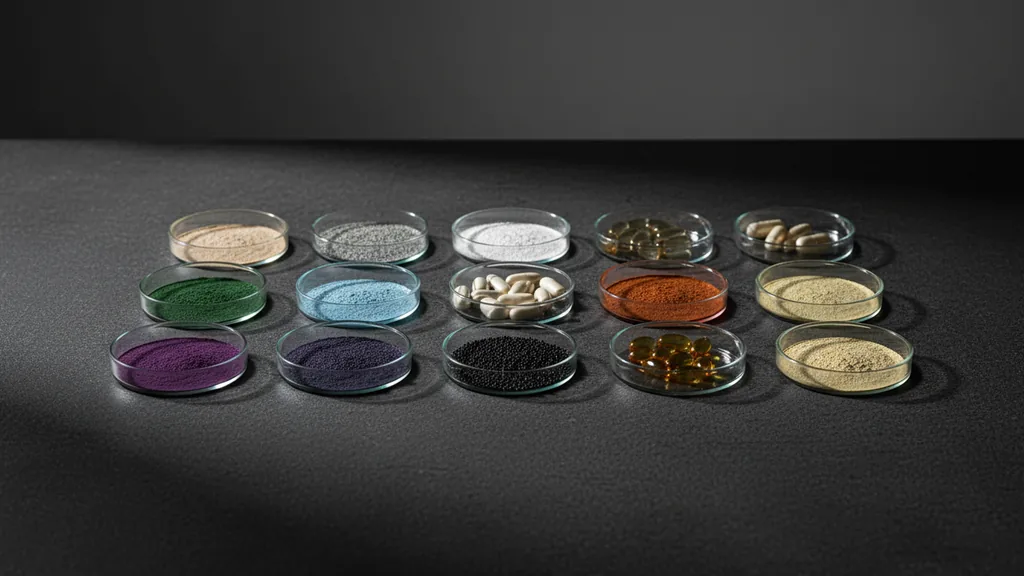
The short version: across the twelve ingredients that carry the five categories we rate, four have human evidence you can rely on, two work under a condition the label rarely states, five rest on small or mixed trials, and one has been tested properly in the people who buy it and failed. What separates the top from the bottom is not how exotic the ingredient is. It is whether anyone ran a trial at a dose you can actually buy.
The grade describes the strength of the human evidence, not how good the ingredient sounds.
Nothing is graded on mechanism alone. A plausible pathway in a test tube is not a result.
| Ingredient | Grade | Studied dose | The short verdict |
|---|---|---|---|
| Magnesium glycinate | A | 200–400 mg elemental | Well absorbed, gentle on the gut, the form most sleep research uses |
| Magnesium citrate | A | 200–400 mg elemental | Well absorbed and cheap; laxative at the top end |
| KSM-66 ashwagandha | A | 300–600 mg | The standardized root extract behind most modern stress trials |
| Sodium & potassium | A | ~500–1,000 mg sodium per hard hour | The only electrolytes you lose in amounts worth replacing |
| L-citrulline | B | 3,000–6,000 mg | Raises blood arginine reliably; the performance payoff is still argued |
| Zinc | B | ~15–30 mg | Restores testosterone if you are deficient; does little if you are not |
| Tongkat ali | C | 200–400 mg extract | Small trials, mostly in older or stressed men, results mixed |
| Fenugreek | C | 300–600 mg extract | Some signal on libido; effects on testosterone less convincing |
| Boron | C | ~6–10 mg | Small studies nudging free testosterone and SHBG, short-term |
| Maca | C | 1,500–3,000 mg | Modest effect on desire, and without changing testosterone |
| Magnesium L-threonate | C | ~1,000–2,000 mg compound | Sold for the brain at a premium; human evidence thin, elemental dose low |
| D-aspartic acid | D | ~2,000–3,000 mg | Promising early study; better trials failed to reproduce it |
Magnesium, ashwagandha root extract, sodium. Cheap, old, unglamorous, and studied for decades at doses ordinary products contain. Nothing on the A list was discovered recently or named after a laboratory. The ingredients that market hardest cluster at C.
This is the trap. KSM-66 earns an A at 300–600 mg, and a product carrying 50 mg of it earns nothing while printing the same name on the front. Grade A tells you the ingredient can work. Only the panel tells you whether this bottle will.
Our Label Dose Checker exists for exactly that gap, and it is why an A-grade ingredient at a tenth of the studied dose still lands a product near the bottom of a ranking.
Zinc restores testosterone in men who are deficient and does little in men who are not — yet it appears in nearly every testosterone formula, sold to people with no idea of their status. Sodium is the same shape of claim: essential during a hard, sweaty hour, unnecessary on a normal day.
A conditional effect sold as a universal one is the most common honest-looking lie in this business. Nothing on the label is false. It just is not about you.
D-aspartic acid is the category's cautionary tale. An early study in untrained men looked good, the industry built products around it, and then it was tested in resistance-trained men at 6 g a day for twelve weeks: no change in testosterone, no change in training outcomes. We wrote that story in full in do testosterone boosters work.
It is still on shelves. That gap — between what the research settled and what the market kept selling — is most of the reason this site exists.
Every ingredient page carries the full reasoning and the sources behind its grade. The ingredient index is the way in.
Educational only, not medical advice. Grades reflect the published human evidence as we read it and are updated when the evidence moves.